What the FIFA World Cup Can Teach Us About Operational Intelligence
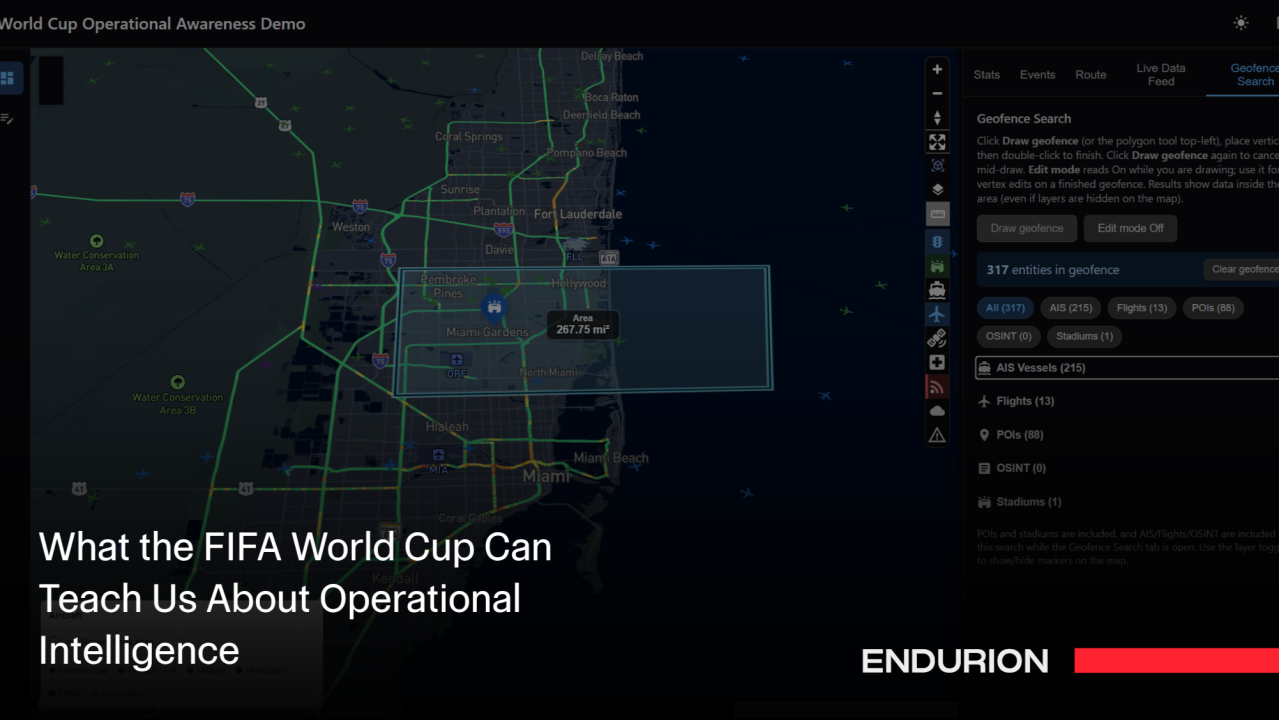
Right now, the United States is hosting one of the largest sporting events in history.
With matches spread across multiple cities, thousands of personnel operating in dynamic environments, and millions of fans moving through venues, hotels, transportation hubs, and public gathering spaces, the challenge isn't a lack of information.
It's making sense of it all in real time.
For organizations responsible for supporting large-scale events, operational success depends on understanding what is happening, where it is happening, and whether it presents a risk to people, assets, or mission objectives. The ability to identify emerging issues before they escalate can make the difference between a routine day and a significant operational incident.
The Challenge of Modern Event Operations
Large events generate an overwhelming volume of information.
Crowd movements, transportation disruptions, severe weather, public safety incidents, drone activity, social media conversations, and countless other data points are constantly evolving. Yet many organizations still rely on disconnected systems, manual reporting processes, and fragmented information sources.
The result is often delayed awareness and slower decision-making.
Leaders need more than alerts. They need context.
They need to understand whether an incident is isolated or connected to broader activity, whether personnel may be affected, and what actions should be taken next.
Turning Data Into Operational Awareness
Technology is changing how organizations approach situational awareness.
Rather than forcing analysts and operators to sift through multiple systems, modern platforms can bring together geospatial data, open-source intelligence, personnel locations, sensor information, and operational reporting into a single operational picture.
This approach enables teams to:
- Monitor critical locations and routes in real time
- Track personnel accountability and movement
- Identify anomalies and emerging risks
- Detect changes in sentiment and public narratives
- Correlate digital activity with physical locations
- Generate actionable intelligence faster
The goal is not to collect more data. The goal is to make better decisions.
From Reactive to Proactive
One of the greatest advantages of modern operational intelligence platforms is the ability to move from reactive monitoring to proactive awareness.
Imagine receiving early warning that a planned route intersects with an emerging protest, that unusual online activity is concentrated around a venue, or that multiple indicators suggest an issue is developing before it impacts operations.
When organizations can connect these signals and understand their significance quickly, they gain valuable time to adapt, communicate, and respond.
In fast-moving environments, time is often the most valuable resource.
The Future of Mission Advantage
As major events continue to grow in scale and complexity, organizations need more than dashboards and reports. They need intelligence-driven situational awareness that provides clarity amid uncertainty.
The future belongs to teams that can fuse information, understand change as it happens, and act with confidence before risks become disruptions.
That's where Pathfinder comes in.
Pathfinder transforms fragmented information into a unified operational picture, helping organizations monitor dynamic environments, identify emerging threats, maintain personnel accountability, and support faster, more informed decision-making. Built for complex operations, Pathfinder enables teams to see more, understand more, and respond faster when it matters most.
Interested in learning more? Contact demo@endurion.com to schedule a Pathfinder demonstration and see how operational intelligence can help your organization stay ahead of emerging challenges.