Humanitarian Response Has a Data Problem. Lives Depend on Solving It.
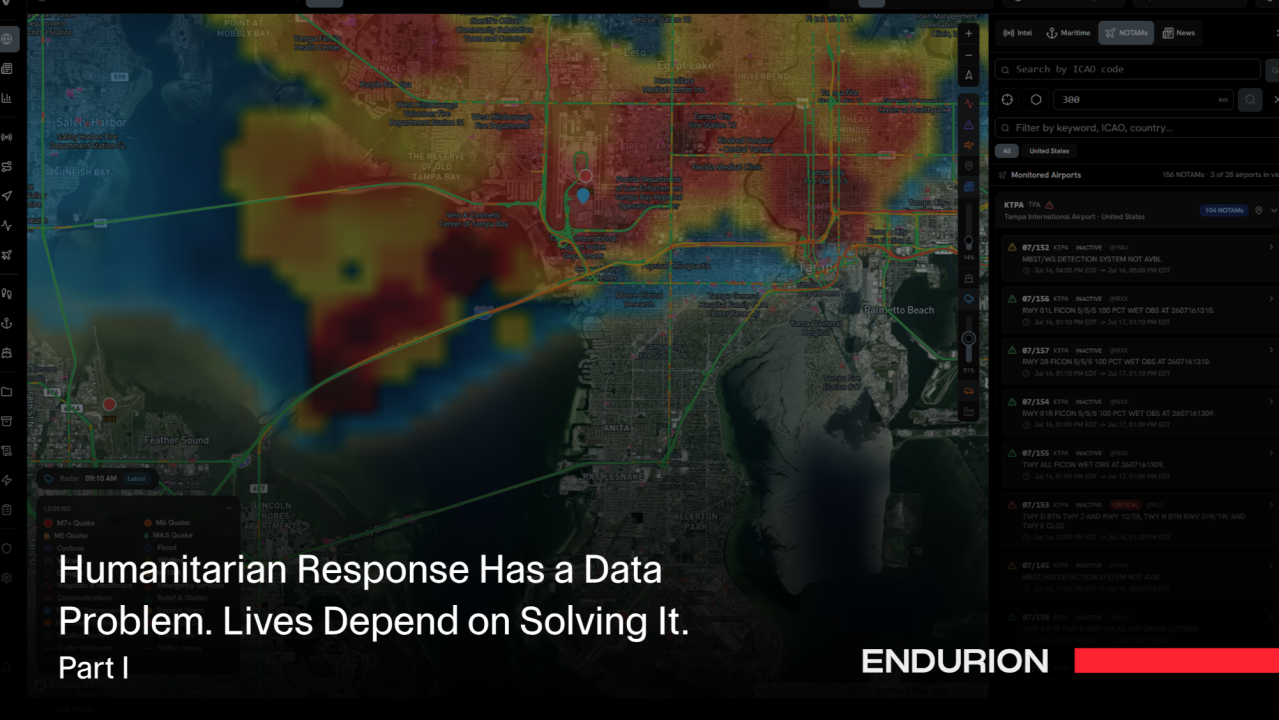
When disaster strikes, the challenge isn't a lack of information.
It's having too much of it.
Weather forecasts. News reports. Flight trackers. Maritime traffic. Border crossings. Infrastructure maps. Shelter locations. Intake spreadsheets. Every organization has access to data, yet responders still struggle to answer the questions that matter most.
- Where are people actually stranded?
- Which roads are still usable?
- Can aid reach the affected area?
- Where should limited resources go first?
The problem isn't collecting information.
The problem is connecting it.
Humanitarian missions are becoming more complex
Whether responding to hurricanes, floods, earthquakes, or conflict-driven displacement, humanitarian organizations now operate in environments where conditions change by the hour.
A road that's open this morning may be underwater by afternoon.
An airport may remain operational while surrounding infrastructure has failed.
Border crossings can become chokepoints without warning.
Meanwhile, requests for assistance continue to grow.
Decision-makers are forced to piece together dozens of disconnected systems while simultaneously coordinating personnel, transportation, logistics, and affected populations.
The spreadsheet problem
Most humanitarian organizations also face another challenge.
Case management.
Families requesting assistance often exist inside spreadsheets exported from separate systems. While useful for recordkeeping, these files rarely provide operational insight.
They answer questions like:
"How many requests did we receive?"
But they rarely answer:
"Where should we deploy resources next?"
That distinction matters.
Operational decisions require context, not reports.
Decision advantage begins with a common operating picture
Effective humanitarian response isn't about finding more information.
It's about creating a shared understanding.
When weather, infrastructure, transportation, population movement, and assistance requests exist within one operational picture, organizations spend less time searching for answers and more time delivering aid.
The future of humanitarian response won't be defined by who has the most data.
It will belong to those who can turn information into decisions before conditions change again.
Coming in Part Two: How integrating live operational intelligence with case management transforms humanitarian response from reactive coordination into proactive mission execution.